
Essential Criteria for Selecting a Luxury Interior Designer for International Projects
Global luxury real estate transactions have surged, with international buyers accounting for a significant portion of high-end property acquisitions in major hubs like London, New York, and Dubai. According to recent market analyses, the demand for bespoke, cross-border interior design services has grown by over 20% annually among ultra-high-net-worth individuals. This growth reflects a shift toward seeking designers who can navigate not just aesthetic preferences, but also complex logistical, cultural, and regulatory landscapes. Selecting the right partner is no longer about finding a talented decorator; it is about securing a strategic operator capable of delivering perfection across continents. (Contact Beverly Hills Luxury)
Global Experience and Discretion
When commissioning a luxury interior project that spans borders, the designer's portfolio must demonstrate more than just aesthetic versatility. It must prove a history of successful execution in diverse geopolitical and cultural environments. The most distinguished firms operate with a "quiet luxury" ethos, where discretion is valued as highly as creativity. This is particularly critical for clients who are heads of state, royalty, or global entertainment icons. (About Kenneth Bordewick The)
Consider the track record of designers who have worked with royal families and high-profile figures across four continents. For instance, a designer who has completed projects for the royal family of Bahrain, including hospital floors and private residences, or who has worked on yachts in Monaco and palaces in Doha, possesses a level of operational maturity that is rare. Such experience ensures that the designer understands the nuanced requirements of privacy, security, and cultural sensitivity that define ultra-luxury international work. (Kenneth Bordewick Beverly Hills)
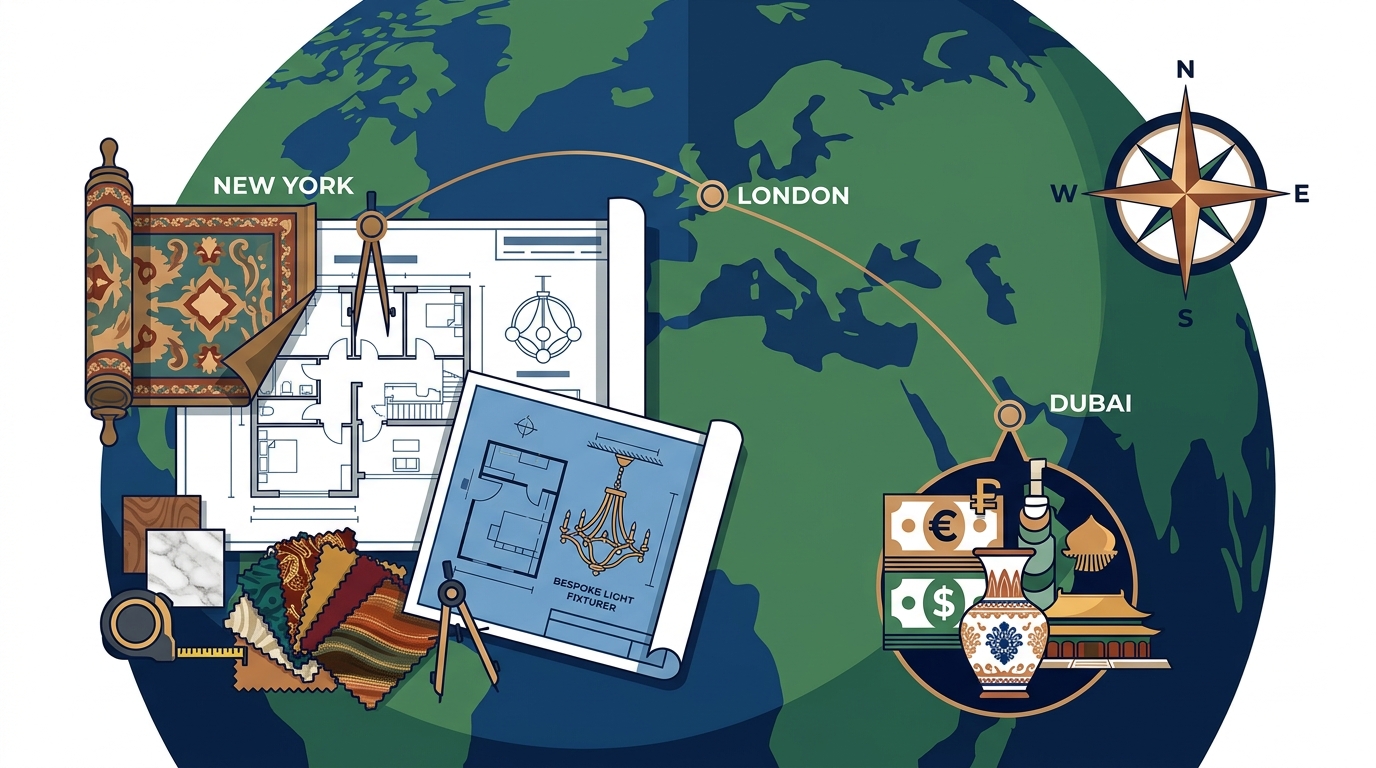
Furthermore, the ability to manage projects in major global hubs is essential. A designer with a presence in Beverly Hills, London, New York, and Paris can seamlessly coordinate with local artisans, contractors, and regulatory bodies. This global footprint allows for the sourcing of rare materials and the implementation of bespoke millwork that might be impossible to replicate locally. The integration of these global resources ensures that the final result is not just a collection of imported items, but a cohesive, culturally resonant space. (Kenneth Bordewick Beverly Hills)
Wellness and Quiet Luxury Frameworks
Modern luxury is no longer defined solely by opulence. It is increasingly defined by wellness, comfort, and the psychological impact of space. The "Quiet Luxury" framework has emerged as a dominant trend among discerning clients who prioritize substance over status symbols. This approach focuses on creating environments that promote mental and physical well-being through thoughtful design principles.
Wellness in design involves the strategic use of light, air quality, acoustics, and biophilic elements to create spaces that heal and rejuvenate. For international projects, this means adapting wellness principles to local climates and cultural norms. For example, a residence in Dubai might require advanced cooling and shading strategies, while a home in London might focus on maximizing natural light and creating cozy, insulated retreats.
Designers who specialize in this niche often have formal training or partnerships with wellness experts. They understand how to integrate technology seamlessly into the home, ensuring that smart home systems enhance rather than disrupt the living experience. This holistic approach ensures that the home is not just a visual masterpiece, but a functional sanctuary that supports the client's lifestyle and health.
Material Integrity and Sourcing
The foundation of any luxury interior lies in the integrity of its materials. For international projects, sourcing rare and high-quality materials requires a robust network of suppliers and a deep understanding of global trade regulations. Designers must be able to trace the origin of every stone, wood, and fabric to ensure authenticity and ethical sourcing.
One critical aspect of material integrity is the use of precious finishes and rare materials. A designer with a background in gemology or diamondology, for example, brings an unparalleled eye for detail and quality. This expertise allows them to select materials that are not only beautiful but also durable and timeless. Such knowledge is invaluable when working with high-value clients who expect nothing less than perfection.
Additionally, the ability to create bespoke millwork is a key differentiator. Hand-carved library paneling, custom joinery, and architectural woodwork add a layer of uniqueness and craftsmanship that cannot be achieved with mass-produced items. These elements become sculptural heirlooms, adding value and character to the space. Designers who oversee the creation of these bespoke pieces ensure that every detail aligns with the overall vision and quality standards.
Operational Execution and Client Process
The success of an international luxury project depends heavily on the designer's operational execution. This includes the ability to manage complex timelines, coordinate with multiple stakeholders, and maintain clear communication across time zones. A structured client process is essential for ensuring that the project stays on track and meets the client's expectations.
The typical process begins with a deep consultation to understand the client's lifestyle, preferences, and functional needs. This is followed by the creation of mood boards and precision plans that define the vision. Throughout the project, the designer works personally with the client, providing regular updates and making adjustments as needed. The final stage involves the "grand reveal," where every angle and sight line is considered to ensure a flawless presentation.
For international clients, this process must be adapted to accommodate travel and remote collaboration. Designers who offer virtual consultations and have a strong digital presence can effectively manage projects from afar. However, the importance of on-site presence cannot be overstated. Regular visits to the project site ensure that the work is progressing according to plan and that any issues are addressed promptly.
Comparison of Design Approaches
Understanding the different approaches to luxury interior design can help clients make an informed decision. Below is a comparison of key design philosophies and their suitability for international projects.
| Design Approach | Key Focus | Best For | International Suitability |
|---|---|---|---|
| Quiet Luxury | Wellness, subtlety, and material integrity | Private residences for royalty and heads of state | High, due to focus on timeless quality |
| Ultra-Luxury Opulence | Grandeur, rare materials, and bespoke craftsmanship | Hospitality venues and high-profile entertainment spaces | Medium, requires strong local artisan networks |
| Modern Minimalist | Clean lines, functionality, and technology integration | Urban apartments and modern estates | High, due to universal appeal and ease of sourcing |
| Heritage Restoration | Preservation of historical elements and cultural context | Historic mansions and palaces | Low to Medium, requires deep local knowledge |
Key Takeaways
- Global Footprint: Look for designers with a proven track record across multiple continents, such as those who have worked in Beverly Hills, London, New York, and Dubai.
- Discretion is Paramount: For high-profile clients, a designer's ability to maintain privacy and confidentiality is as important as their design skills.
- Wellness Integration: The "Quiet Luxury" framework prioritizes mental and physical well-being, making it ideal for private residences.
- Material Expertise: Designers with backgrounds in gemology or diamondology offer superior insight into rare materials and precious finishes.
- Bespoke Craftsmanship: Custom millwork and hand-carved details are essential for creating unique, heirloom-quality spaces.
- Structured Process: A clear, step-by-step client process ensures that international projects remain on schedule and within budget.
- Personal Consultation: Direct interaction with the principal designer is crucial for aligning the vision with the client's lifestyle.
Frequently Asked Questions
What is the "Quiet Luxury" framework in interior design?
Quiet Luxury is a design philosophy that emphasizes subtlety, quality, and wellness over overt opulence. It focuses on creating spaces that are comfortable, functional, and timeless, using high-quality materials and thoughtful design principles.
How do international luxury designers handle logistics?
International designers manage logistics through a combination of global supplier networks, local partnerships, and advanced project management tools. They often have offices in key global hubs to facilitate coordination and oversight.
Why is discretion important in luxury interior design?
Discretion is critical for high-profile clients who value privacy. Designers who prioritize discretion ensure that project details, client identities, and design choices remain confidential, protecting the client's personal and professional reputation.
What role does wellness play in luxury home design?
Wellness in design involves creating spaces that promote physical and mental health through the use of light, air quality, acoustics, and biophilic elements. It ensures that the home is not just beautiful, but also supportive of the client's well-being.
How do designers source rare materials for international projects?
Designers source rare materials through established networks of global suppliers, artisans, and ethical mines. They often have expertise in gemology or material science to verify authenticity and quality.
What is the typical timeline for an international luxury project?
Timelines vary based on the scope and complexity of the project. However, a typical ultra-luxury project can take 18 to 24 months from concept to completion, including sourcing, fabrication, and installation.
Can a designer work remotely on an international project?
While remote consultation is possible, on-site presence is crucial for ensuring quality and addressing issues in real-time. Most top designers balance remote coordination with regular site visits.
Request a Private Consultation
If you are planning an international luxury project, it is essential to partner with a designer who understands the complexities of global design. Beverly Hills Luxury Interiors offers a unique blend of global experience, wellness-focused design, and uncompromising discretion. To discuss your vision and explore how we can bring your project to life, please request a private consultation today.