
Ultra-Luxury Interior Design: Selecting the Right Designer for Your Estate
Selecting an interior designer for an ultra-luxury property is not merely a procurement decision. It is a strategic partnership that defines the legacy of your home. According to recent industry analyses, the global luxury interior design market is projected to grow significantly, with high-net-worth individuals increasingly prioritizing bespoke, wellness-integrated environments over standard opulence. This shift demands a designer who possesses not only aesthetic mastery but also the operational capacity to manage complex, multi-continental logistics. The following guide outlines the critical criteria for identifying a designer capable of delivering perfection in the most discerning circles. (Contact Beverly Hills Luxury)
Understanding Ultra-Luxury Design Standards
Ultra-luxury interior design transcends the accumulation of expensive objects. It is a holistic discipline that harmonizes architectural precision, rare materiality, and human-centric wellness. In this tier of design, the aesthetic is secondary to the experience. The space must breathe, function flawlessly, and reflect the unique psychological profile of the occupant. (Journal Luxury Interior Design)
Ultra-luxury design is the practice of creating bespoke environments that integrate rare materials, architectural integrity, and wellness principles to serve the highest echelons of wealth. This definition distinguishes it from standard high-end design, which often focuses primarily on visual impact. For clients who have owned multiple properties, the novelty of luxury fades. What remains is the quality of life the space provides. A designer must understand this nuance. They must move beyond mood boards to address light, acoustics, flow, and the tactile experience of every surface.
The framework for this level of design is often referred to as "Quiet Luxury." This approach rejects overt branding and loud patterns in favor of exceptional craftsmanship, timeless silhouettes, and materials that age with grace. It is a design language that speaks in whispers rather than shouts, appealing to those who value discretion and substance over visibility.
Evaluating Designer History and Discretion
When selecting a designer for a project of this magnitude, their track record is the primary indicator of capability. However, in the ultra-luxury sector, the nature of that track record is specific. It is not just about the number of projects completed, but the caliber of the clients served and the level of discretion maintained.
A designer who has worked with royalty, heads of state, and global entertainment icons understands the unique pressures of high-profile living. For these clients, privacy is as valuable as the design itself. A designer must be able to navigate the complexities of designing for public figures who require absolute confidentiality. This often means working with non-disclosure agreements, managing anonymous site visits, and coordinating with security teams.
Discretion in luxury design is the non-negotiable standard that protects the privacy and security of high-profile clients while delivering exceptional aesthetic results. When reviewing a designer's portfolio, look for evidence of this discretion. Do they showcase the work without revealing the client's identity? Do they demonstrate experience with sensitive projects such as private libraries, secure residences, or confidential hospitality venues?
Furthermore, consider the longevity of the designer's career. A designer with over three decades of experience has likely navigated economic shifts, supply chain disruptions, and evolving design trends. This resilience is crucial for long-term projects that may span several years. Kenneth Bordewick, for instance, has spent thirty-one years designing homes, hotels, and private residences across four continents, building a reputation on this very foundation of trust and longevity.
The Role of Wellness in High-End Design
The modern luxury home is increasingly viewed as a sanctuary for physical and mental restoration. Consequently, the integration of wellness principles has become a critical factor in selecting a designer. This goes beyond adding a gym or a spa. It involves designing the entire environment to support health, sleep, and emotional well-being.
Wellness design principles include optimizing natural light exposure, ensuring superior air quality through advanced ventilation systems, and selecting non-toxic, natural materials that do not off-gas harmful chemicals. Acoustic engineering is also vital. In a large estate, controlling sound transmission between rooms and from the outside environment is essential for peace and quiet.
Wellness design is the architectural and interior design methodology that prioritizes the physical and mental health of occupants through environmental controls, material selection, and spatial planning. A designer who specializes in this area will ask questions about your sleep patterns, your sensitivity to light, and your need for private retreat spaces. They will consider how the flow of the home supports your daily rituals and routines.
At Beverly Hills Luxury Interiors, this is formalized through "The Quiet Luxury Framework" and specific "Wellness Design Principles." This approach ensures that the beauty of the home does not come at the cost of its functionality or health. It is a holistic view that recognizes the home as a living organism that must support the life within it.
Materials, Integrity, and Sourcing
The integrity of a luxury design is defined by the materials used. In the ultra-luxury sector, clients expect access to rare, sustainable, and historically significant materials. This requires a designer with deep relationships with artisans, quarries, and mills around the world.
Bespoke millwork is a hallmark of this tier. Hand-carved library paneling, custom joinery, and architectural woodwork are not mass-produced. They are sculptural heirlooms that take months or even years to create. A designer must have the expertise to specify these elements and the project management skills to oversee their fabrication and installation.
Bespoke millwork refers to custom-made architectural woodwork and joinery that is handcrafted to specific design specifications, serving as a defining element of luxury interior design. This level of detail requires a designer with a background in craftsmanship or a deep appreciation for traditional techniques. Kenneth Bordewick's educational background in Gemology and Diamondology at the Gemological Institute of America provides a unique lens for evaluating rare materials and precious finishes. This expertise ensures that every stone, metal, and fabric is selected for its rarity, quality, and aesthetic harmony.
Furthermore, the sourcing process must be transparent and ethical. High-net-worth individuals are increasingly concerned with the provenance of their materials. A reputable designer will be able to trace the origin of their stones, woods, and textiles, ensuring they meet ethical and sustainability standards.

Navigating Global Logistics and Operations
Ultra-luxury projects are rarely confined to a single location. Clients often own properties in multiple countries, requiring a designer who can manage complex international logistics. This involves coordinating with local contractors, navigating foreign building codes, and managing the shipping of fragile, high-value items across borders.
A designer with a global presence can streamline this process. They will have established relationships with artisans and suppliers in key markets such as Europe, the Middle East, and Asia. This network allows them to source unique items quickly and reliably, avoiding the delays and costs associated with ad-hoc international sourcing.
Global logistics in luxury design is the coordinated management of international supply chains, contractor networks, and regulatory compliance to execute seamless design projects across multiple continents. This operational capability is as important as the design itself. A beautiful design that cannot be built or installed efficiently is of little value to the client.
Look for a designer with offices in key global hubs. Beverly Hills Luxury Interiors, for example, maintains offices in Beverly Hills, New York, London, Dubai, Riyadh, and Doha. This global footprint allows them to provide on-the-ground support for projects in the United States, United Kingdom, France, Italy, and the Gulf Cooperation Council states. This local expertise ensures that international projects are executed with the same level of precision and care as domestic ones.
The Consultation Process: What to Expect
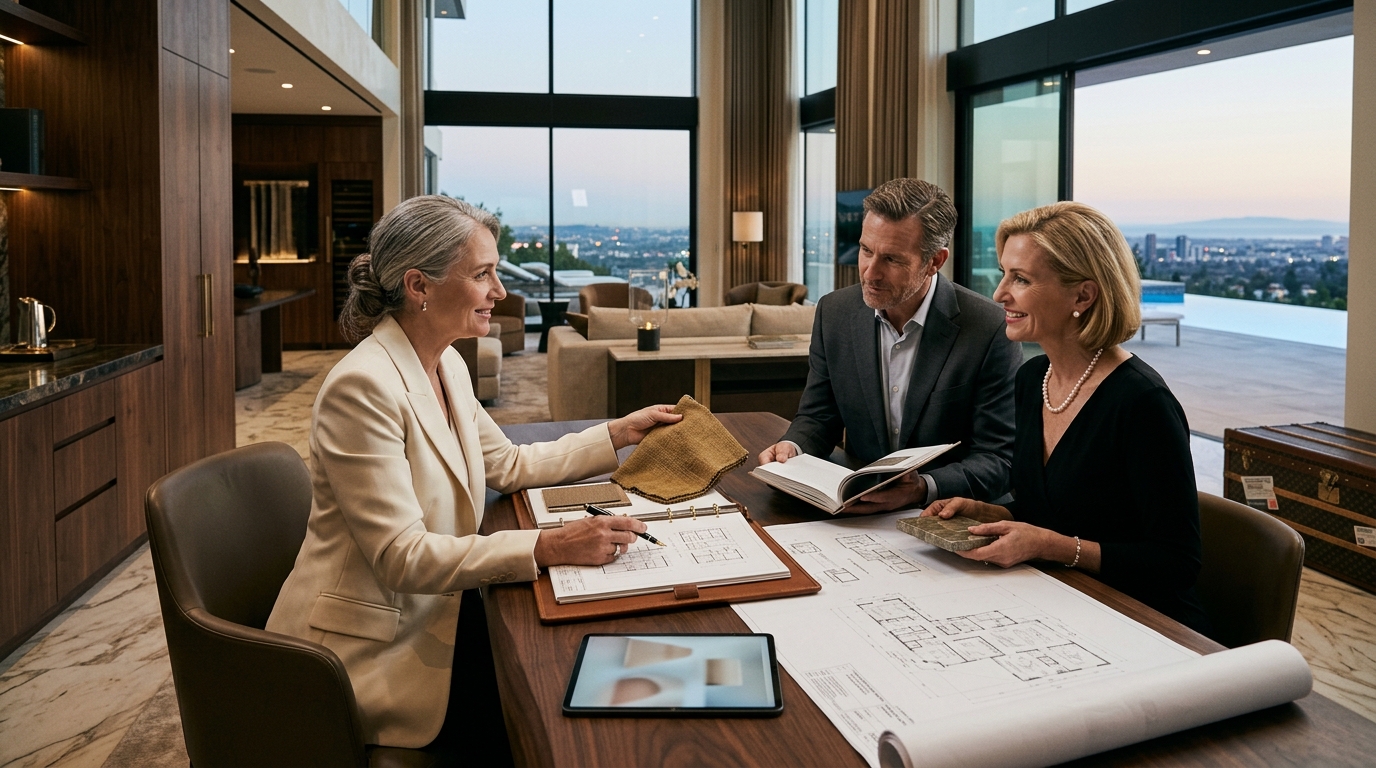
The initial consultation is the first test of the designer-client relationship. In the ultra-luxury sector, this process is typically highly personalized and confidential. You should expect to speak directly with the principal designer, not an intake coordinator or a junior associate.
During this meeting, the designer will listen to your vision, timeline, and aspirations. They will ask detailed questions about your lifestyle, your family, and your long-term goals for the property. This is not a sales pitch. It is a diagnostic session to determine if the designer has the capacity and expertise to deliver on your needs.
The private consultation is the initial, confidential meeting where the designer assesses the client's vision, scope, and budget to determine mutual fit and project feasibility. Be prepared to discuss your budget openly. Ultra-luxury projects typically begin at significant design fee thresholds, often starting at $500,000 or more, depending on the scope. A professional designer will be transparent about their fees and the typical investment required for a project of your scale.
Also, consider the designer's responsiveness. In this tier of service, you expect a personal response within 24 hours. Delays in communication can signal a lack of attention to detail or overextension. A designer who values your time will demonstrate it through their prompt and thoughtful engagement.
Key Takeaways
- Discretion is Paramount: Ultra-luxury designers must maintain absolute confidentiality for high-profile clients, including royalty and heads of state.
- Wellness Integration: Modern luxury design prioritizes health, sleep, and mental well-being through environmental controls and material selection.
- Global Operational Capacity: Successful international projects require a designer with established offices and relationships across multiple continents.
- Material Integrity: Access to rare, ethical, and bespoke materials is a critical differentiator in the ultra-luxury market.
- Direct Access: Clients should expect to work directly with the principal designer, not a team of junior associates, from the initial consultation.
- Quiet Luxury Framework: The trend is shifting towards timeless, understated elegance over overt branding and loud aesthetics.
- Long-Term Partnership: Ultra-luxury projects are multi-year engagements that require a designer with the longevity and resilience to see them through.
Frequently Asked Questions
What is the minimum project size for working with an ultra-luxury designer?
Ultra-luxury designers typically work on projects that begin at $500,000 in design fees. This threshold reflects the level of bespoke craftsmanship, global sourcing, and personalized attention required for such commissions.
How long does a typical ultra-luxury project take?
Timelines vary based on scope, but complex ultra-luxury projects often span several years. This includes the design phase, fabrication of bespoke elements, and on-site installation. Patience and clear communication are essential.
Can a designer manage projects in multiple countries simultaneously?
Yes, designers with a global presence can manage international projects. They utilize local offices and established contractor networks to ensure quality and compliance in each location. This requires robust project management and logistical coordination.
What is the "Quiet Luxury" framework?
Quiet Luxury is a design philosophy that emphasizes exceptional craftsmanship, rare materials, and timeless aesthetics over visible branding. It focuses on the experience and longevity of the space rather than its immediate visual impact.
How do I ensure my privacy during the design process?
Reputable ultra-luxury designers operate under strict non-disclosure agreements. They understand the sensitivity of their clients' identities and take every precaution to protect their privacy throughout the design and construction phases.
What role does wellness play in luxury design?
Wellness is central to modern luxury design. It involves optimizing light, air, sound, and materials to support the physical and mental health of the occupants. This goes beyond adding wellness amenities to creating a fundamentally healthy environment.
Why is a designer's educational background important?
A designer's background, such as gemology or architecture, informs their eye for detail and material quality. It provides a deeper understanding of the value and properties of the rare materials used in ultra-luxury projects.
Begin Your Private Consultation
Selecting the right designer is the first step in creating a home that reflects your legacy. If you are ready to discuss your vision with a designer who understands the nuances of ultra-luxury living, we invite you to begin the conversation. Every exceptional interior begins with a dialogue.
Kenneth Bordewick reviews all inquiries personally. Within 24 hours, a member of the Beverly Hills Luxury Interiors team will contact you to schedule a preliminary call. This call is at no charge and is designed to help us understand your project and determine if we are the right fit for your needs.
Request a Private Consultation with Kenneth Bordewick today to explore how we can bring your vision to life with the discretion, expertise, and excellence you deserve.