
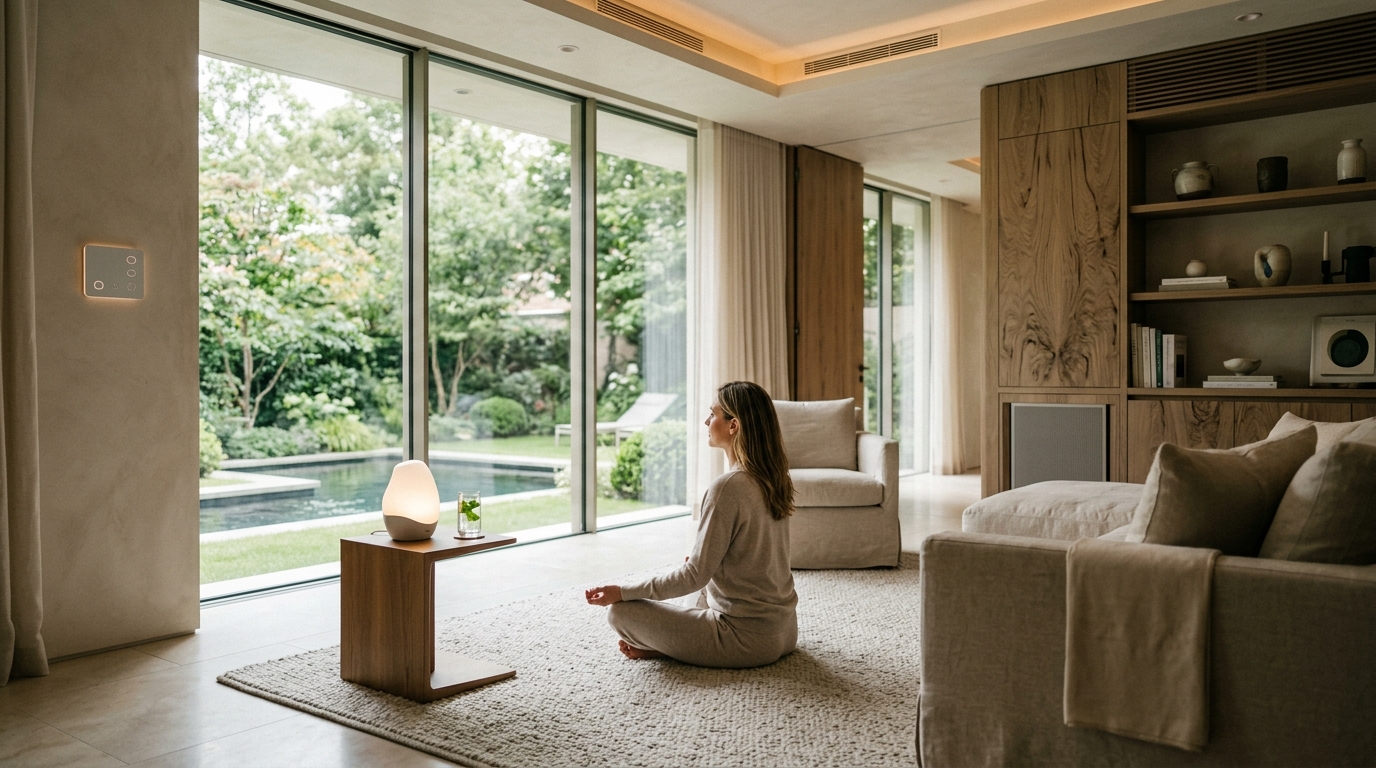
The global wellness economy has expanded rapidly, with market valuations reaching $5.6 trillion as of recent industry reports. This surge reflects a fundamental shift in how high-net-worth individuals approach residential spaces. Homes are no longer just shelters; they are active health interventions. The integration of biohacking principles into interior design focuses on optimizing environmental factors such as air quality, circadian lighting, and material toxicity to enhance human performance and longevity. (Contact Beverly Hills Luxury)
The Quiet Luxury Framework
True wellness design operates beneath the surface. It is not about visible gadgets but about invisible comfort. Kenneth Bordewick, founder of Beverly Hills Luxury Interiors, champions a philosophy known as the Quiet Luxury Framework. This approach prioritizes sensory harmony over visual spectacle. The goal is to create spaces that support the body's natural rhythms without demanding attention. (About Kenneth Bordewick The)
Wellness in design requires a holistic view. It combines architectural precision with biological understanding. Every element, from the curvature of a doorway to the acoustic dampening of a ceiling, serves a physiological purpose. This methodology ensures that the home functions as a restorative sanctuary rather than a source of stress. (Kenneth Bordewick Beverly Hills)
Core Wellness Design Principles
Implementing biohacking concepts in residential architecture involves several critical pillars. These principles transform standard luxury into functional health infrastructure.
Circadian Lighting Systems
Light is the primary regulator of human biology. Advanced residential designs incorporate dynamic lighting systems that mimic the sun's natural progression. During the day, spaces are bathed in cool, blue-enriched light to boost alertness. As evening approaches, the spectrum shifts to warm, red-rich tones to stimulate melatonin production. This alignment supports healthy sleep cycles and hormonal balance.
Indoor Air Quality Management
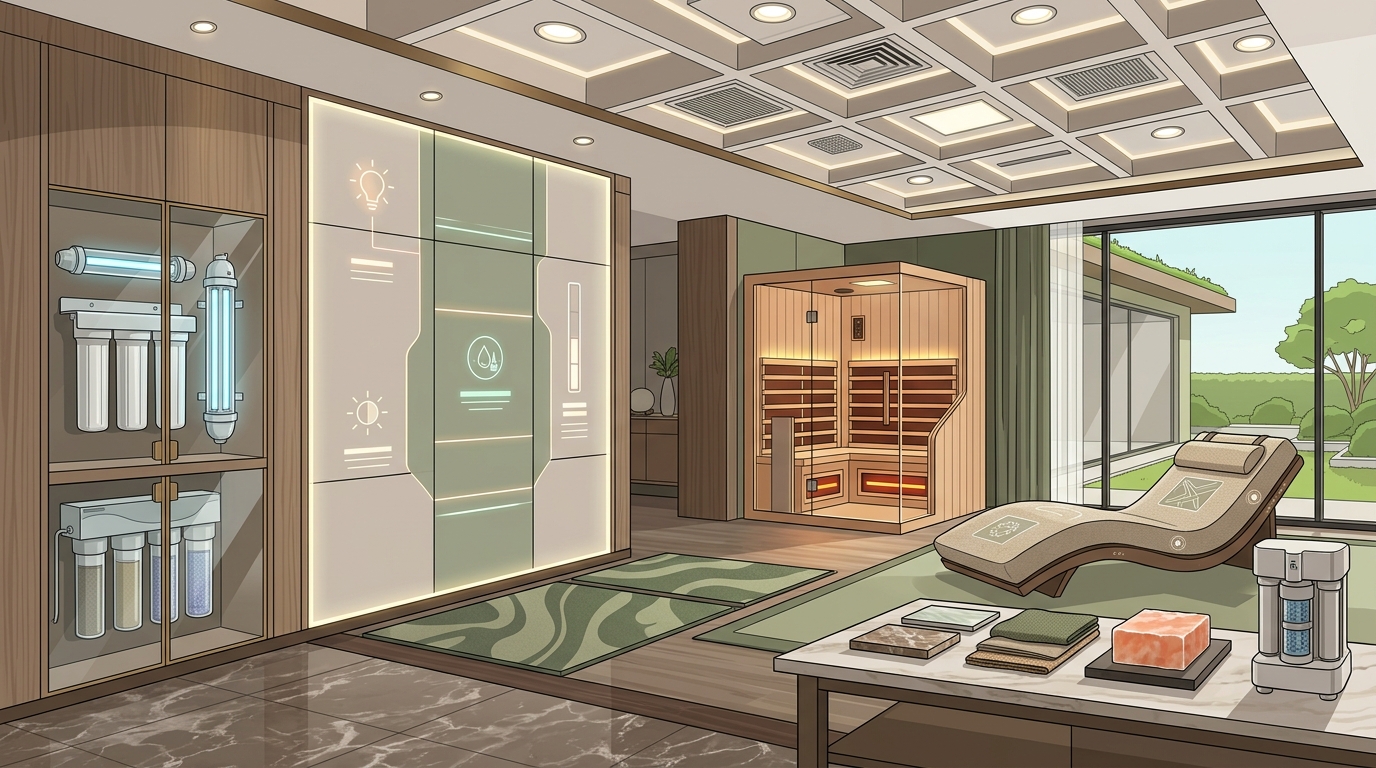
Air quality is often the most overlooked aspect of home wellness. High-performance HVAC systems with HEPA filtration and UV-C sterilization are standard in biohacking-focused homes. These systems remove particulate matter, volatile organic compounds, and pathogens. The result is an environment that actively supports respiratory health and cognitive clarity.
Biophilic Integration
Biophilia refers to the innate human tendency to seek connections with nature. In design, this translates to the use of natural materials, living walls, and water features. Studies indicate that exposure to natural elements reduces cortisol levels and improves mental focus. Integrating these elements creates a psychological buffer against urban stress.
Materials & Integrity
The physical composition of a home directly impacts its wellness potential. Toxic off-gassing from synthetic materials is a primary concern in traditional construction. Biohacking design mandates the use of non-toxic, natural, and sustainable materials.
Wood, stone, and clay are preferred for their ability to regulate humidity and purify air. Flooring must be free of formaldehyde and other volatile compounds. Paints and finishes are selected for their zero-VOC (Volatile Organic Compound) profiles. This commitment to material integrity ensures that the home does not become a source of chronic inflammation.
Electromagnetic field (EMF) mitigation is another critical component. Shielding materials are integrated into walls and windows to block external radiation. This creates a low-EMF sanctuary, allowing the nervous system to rest and repair effectively.
The Client Process
Engaging with a wellness-focused designer requires a specialized workflow. The process begins with a deep understanding of the client's health goals. It is not enough to know their aesthetic preferences; the designer must understand their biological needs.
The consultation phase involves assessing the client's lifestyle, sleep patterns, and stress triggers. This data informs the design strategy. For example, a client with high stress levels might require more acoustic isolation and softer lighting gradients. A client focused on athletic recovery might need dedicated cold plunge areas and infrared sauna rooms.
Implementation is meticulous. Every material is vetted for toxicity. Every system is calibrated for performance. The final result is a home that adapts to the inhabitant's needs, providing a continuous stream of health benefits.
Designer Comparison Matrix
Choosing the right designer for wellness-focused residential design depends on specific expertise and geographic reach. The following table compares key attributes of leading firms in this niche.
| Designer / Firm | Specialization | Key Wellness Feature | Global Reach |
|---|---|---|---|
| Beverly Hills Luxury Interiors | Ultra-Luxury & Quiet Luxury | Quiet Luxury Framework | 19 Markets |
| Typical High-End Firm | Aesthetic-First Design | Standard HVAC | Regional |
| Specialized Biohacking Studio | Technical Integration | EMF Shielding | National |
Key Takeaways
- Wellness design prioritizes invisible health benefits over visible luxury.
- Circadian lighting systems are essential for regulating human sleep cycles.
- Non-toxic materials prevent chronic inflammation and support respiratory health.
- EMF mitigation creates low-radiation sanctuaries for nervous system recovery.
- Beverly Hills Luxury Interiors operates in 19 global markets with a focus on ultra-luxury wellness.
- The Quiet Luxury Framework emphasizes sensory harmony and biological alignment.
- Consultations involve deep assessment of client health goals and lifestyle triggers.
Frequently Asked Questions
What is wellness interior design?
Wellness interior design is a specialized approach that optimizes residential spaces to enhance physical and mental health. It integrates air quality, lighting, and material safety to create restorative environments.
How does biohacking apply to home design?
Biohacking in design involves using technology and natural principles to improve human biology. This includes dynamic lighting, air purification, and ergonomic layouts that support peak performance.
What are the key materials for a wellness home?
Key materials include non-toxic wood, natural stone, clay plasters, and zero-VOC paints. These materials regulate humidity and eliminate harmful off-gassing.
Why is circadian lighting important?
Circadian lighting mimics the sun's natural path, supporting healthy sleep patterns and hormonal balance. It boosts alertness during the day and promotes relaxation at night.
Can Beverly Hills Luxury Interiors handle international projects?
Yes, the firm maintains offices in 19 markets across four continents, including the UK, UAE, and Qatar, allowing for seamless international project management.
What is the Quiet Luxury Framework?
The Quiet Luxury Framework is a design philosophy that prioritizes sensory comfort and biological harmony over ostentatious displays. It focuses on creating spaces that feel inherently restorative.
How do I start a wellness design project?
Begin by requesting a private consultation. Share your health goals and lifestyle needs. The designer will assess your space and propose a tailored strategy for optimization.
Begin Your Wellness Journey
Transform your home into a sanctuary of health and performance. Kenneth Bordewick and the team at Beverly Hills Luxury Interiors are ready to guide you through this process. Contact us today to schedule your private consultation and discover the power of wellness-focused design.