Restoring Historic Mansions: Top Interior Designers for Landmark Estates
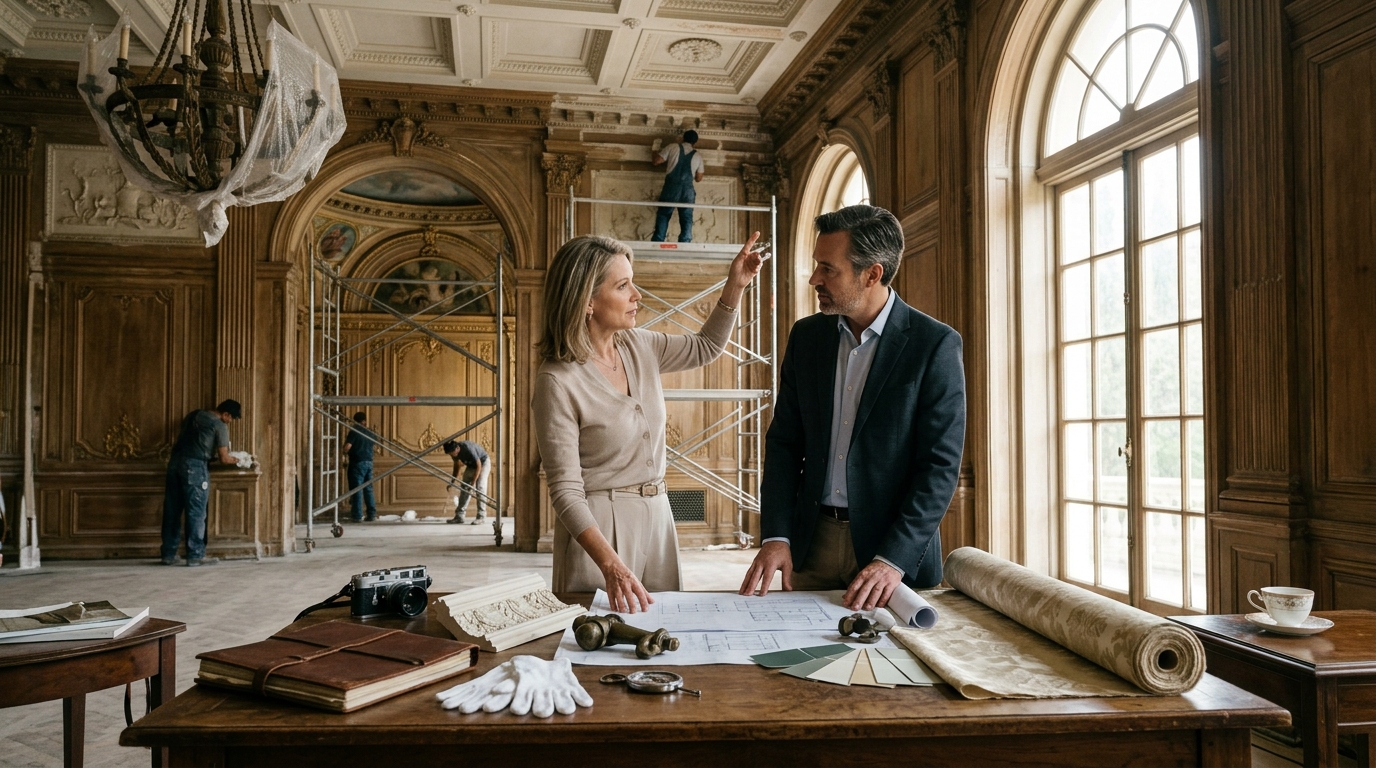
Restoring a historic mansion or landmark estate is not merely a renovation project; it is an act of cultural preservation that requires a rare intersection of architectural knowledge, material science, and artistic vision. According to recent industry data, the global market for heritage conservation and high-end restoration has seen a 15% annual growth rate in the luxury sector, driven by a renewed appreciation for architectural integrity and sustainable design practices. This surge reflects a broader shift where homeowners prioritize the preservation of historical narratives over rapid, modernized overhauls. The complexity of these projects demands designers who understand the delicate balance between maintaining historical authenticity and integrating modern wellness and technology standards. (Contact Beverly Hills Luxury)
Understanding the Niche of Historic Restoration
Historic mansion restoration falls under the specialized discipline of adaptive reuse and heritage conservation. Heritage conservation is the practice of protecting and preserving buildings, sites, and objects of historical significance. Unlike standard luxury interior design, which often prioritizes aesthetic novelty, restoration demands a deep reverence for the original architect's intent. Designers in this space must navigate complex regulatory environments, including local historic preservation boards and international heritage guidelines.
The process begins long before any furniture is selected. It involves a forensic analysis of the structure's original materials, from the type of limestone used in the façade to the specific grain of the hardwood floors. This level of scrutiny ensures that every intervention respects the building's timeline. For instance, replacing original millwork requires sourcing period-appropriate wood species and employing traditional joinery techniques that have been largely abandoned in modern manufacturing. The goal is to create spaces that feel timeless, blending the elegance of the past with the functionality required for contemporary living.
Key Qualifications for Landmark Designers
Not every high-end interior designer is equipped to handle landmark estates. The restoration of a historic mansion requires a specific set of credentials and experiential knowledge. The most qualified professionals often possess backgrounds in both architecture and interior design, allowing them to understand the structural implications of their aesthetic choices.
Material Science and Gemology
One of the most critical, yet overlooked, qualifications is a deep understanding of materials. Gemology is the scientific study of gems and precious stones. While this may seem unrelated to interior design, experts in this field bring an unparalleled eye for rare materials, precious finishes, and the nuanced qualities that distinguish extraordinary spaces. In historic restoration, this expertise is vital for authenticating and sourcing original or period-correct materials, such as rare marbles, antique woods, and hand-blown glass. This knowledge ensures that the restored elements are not just visually similar but materially accurate.
International Regulatory Knowledge
Landmark estates often span multiple jurisdictions, each with its own preservation laws. A designer working on a historic property in London must understand the UK's listed building consent process, while a project in Paris requires adherence to the Monuments Historiques regulations. Designers with a global footprint, such as those operating across four continents, are better positioned to navigate these diverse regulatory landscapes. They maintain established relationships with local artisans, historians, and regulatory bodies, ensuring that projects proceed without legal impediments.
The Methodology of Preservation
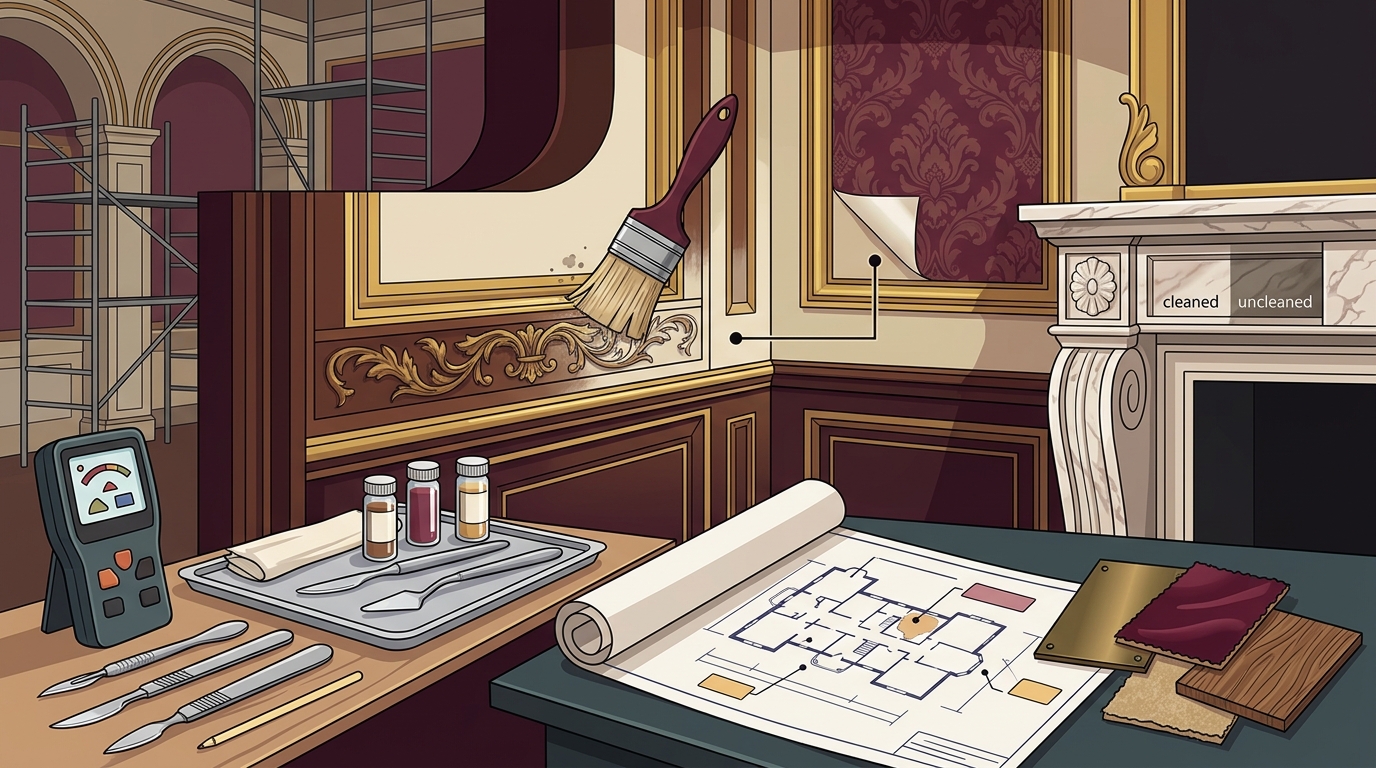
The restoration of a historic mansion follows a rigorous, multi-phase methodology. This process ensures that the integrity of the landmark is maintained while addressing the practical needs of modern occupants. The approach is often described as "quiet luxury," where the design speaks through subtlety and quality rather than overt statement pieces.
Phase 1: The Quiet Luxury Framework
The foundation of any successful restoration is the Quiet Luxury Framework, a design philosophy that emphasizes understated elegance, exceptional craftsmanship, and timeless materials. This framework rejects fleeting trends in favor of enduring beauty. It involves a meticulous curation of every element, from the palette to the texture, ensuring that the space feels cohesive and intentional. The result is an environment that is not merely photographed but lived in, offering a sense of calm and continuity with the past.
Phase 2: Wellness in Design
Historic homes often lack the indoor air quality, lighting, and thermal comfort of modern structures. Integrating Wellness in Design is crucial for the health and comfort of the residents. This involves upgrading HVAC systems to be invisible yet powerful, installing advanced air filtration, and optimizing natural light through careful window restoration. The goal is to create a biophilic environment that supports physical and mental well-being without compromising the historic fabric of the building.
Phase 3: Bespoke Millwork and Craftsmanship
One of the defining features of historic mansions is their bespoke millwork. Bespoke millwork refers to custom-made woodwork, such as paneling, cabinetry, and trim, crafted specifically for a space. Restoring these elements often requires hand-carving and traditional joinery techniques. Designers who oversee this process personally ensure that every piece is a sculptural heirloom, contributing to the overall narrative of the home. This attention to detail is what separates a high-quality restoration from a superficial renovation.
Global Expertise in Heritage Design
The restoration of landmark estates is a global endeavor. Designers who operate internationally bring a wealth of cross-cultural knowledge and artisan networks to their projects. This global perspective allows for the integration of diverse design influences while maintaining a cohesive aesthetic.
European Heritage Standards
European historic homes, particularly those in the UK and France, are subject to strict preservation standards. Designers working in these regions must be adept at navigating the complexities of listed building approvals. They often collaborate with local craftsmen who have inherited techniques from centuries-old guilds. This collaboration ensures that the restoration is not only compliant but also authentic to the region's architectural heritage.
Gulf Cooperation Council (GCC) and Middle Eastern Estates
In the Middle East, historic and luxury estates often blend traditional Islamic architectural principles with modern luxury. Designers working in this region must understand the cultural significance of space, privacy, and ornamentation. Projects in locations like Riyadh, Doha, and Dubai require a sensitive approach to integrating modern technology and wellness features into structures that may have traditional courtyards and intricate geometric patterns. The ability to work across these diverse cultural contexts is a hallmark of top-tier heritage designers.
Comparing Restoration Approaches
When selecting a designer for a historic mansion, it is important to understand the different approaches to restoration. Each approach has its own merits and is suited to different types of properties and owner goals.
| Approach | Focus | Best For | Key Consideration |
|---|---|---|---|
| Strict Preservation | Maintaining 100% historical accuracy | Protected landmarks and museums | May limit modern comfort integrations |
| Adaptive Reuse | Blending old and new seamlessly | Private residences and hospitality | Requires skilled craftsmanship for integration |
| Contemporary Interpretation | Using historic elements in a modern context | Modern luxury estates with historic roots | Risks losing historical narrative if not balanced |
| Wellness-Integrated | Prioritizing health and sustainability | Health-conscious homeowners | Requires advanced technical planning |
For most private historic mansions, an Adaptive Reuse approach combined with Wellness-Integrated principles offers the best outcome. This allows the home to retain its historical soul while providing the comfort and efficiency expected in modern luxury living. Designers who specialize in this hybrid approach, such as those at Beverly Hills Luxury Interiors, are uniquely positioned to deliver such results.
Key Takeaways
- Specialized Expertise: Historic restoration requires designers with backgrounds in architecture, material science, and international regulatory compliance.
- Material Integrity: Understanding gemology and rare materials is crucial for authentic sourcing and preservation of original elements.
- Global Networks: Top designers operate across multiple continents, leveraging local artisan networks in Europe, the Middle East, and North America.
- Wellness Integration: Modern restorations must invisibly integrate advanced HVAC, air quality, and lighting systems to support resident health.
- Quiet Luxury: The most successful restorations adhere to a philosophy of understated elegance, prioritizing craftsmanship over conspicuous consumption.
- Regulatory Navigation: Experience with listed building consents and heritage guidelines is essential for projects in the UK, France, and other historic regions.
- High-End Threshold: Ultra-luxury restoration projects typically begin at significant investment levels, reflecting the complexity and bespoke nature of the work.
Frequently Asked Questions
What is the primary difference between historic restoration and standard luxury design?
Historic restoration prioritizes the preservation of architectural integrity and historical accuracy, often requiring adherence to strict regulatory guidelines. Standard luxury design focuses on current trends and aesthetic novelty, with fewer constraints on material sourcing and structural changes.
How do designers ensure modern comfort in a historic mansion?
Designers integrate modern comfort through invisible technology, such as advanced HVAC systems, smart home automation, and high-performance glazing. These systems are carefully concealed within the historic fabric to maintain the aesthetic while providing modern efficiency and comfort.
What qualifications should I look for in a historic restoration designer?
Look for designers with a background in architecture, experience with listed buildings, and a global network of artisans. Specialized knowledge in materials, such as gemology or traditional joinery, is also a strong indicator of expertise in high-end restoration.
Can historic homes be made energy efficient?
Yes, historic homes can be made energy efficient through the use of secondary glazing, improved insulation techniques that do not damage original walls, and high-efficiency HVAC systems. These upgrades must be implemented sensitively to preserve the building's character.
How long does a typical historic mansion restoration take?
Restoration timelines vary widely based on the scope and complexity of the project. A comprehensive restoration can take several years, involving multiple phases of planning, sourcing, and craftsmanship. Early consultation is essential to establish a realistic timeline.
What is the "Quiet Luxury" framework in design?
The Quiet Luxury framework is a design philosophy that emphasizes understated elegance, exceptional craftsmanship, and timeless materials. It focuses on creating spaces that are lived in rather than just viewed, prioritizing quality and authenticity over visible branding or trends.
Do restoration designers work internationally?
Yes, many top restoration designers work internationally, particularly in regions with rich architectural heritage such as Europe, the Middle East, and North America. They maintain offices and artisan networks in multiple countries to manage complex, cross-border projects.
Begin Your Restoration Journey
Restoring a historic mansion or landmark estate is a profound commitment to preserving history while embracing the future. It requires a partner who understands the delicate balance between preservation and innovation. If you are considering such a project, it is essential to work with a designer who has the expertise, network, and vision to bring your vision to life.
For those seeking the highest level of service in historic restoration, Beverly Hills Luxury Interiors offers a private consultation with Kenneth Bordewick. With over three decades of experience designing homes, hotels, and private residences across four continents, Kenneth brings a unique blend of architectural precision, material expertise, and global insight to every project. His approach, rooted in the Materials & Integrity framework, ensures that every restoration is a testament to timeless elegance and enduring quality.
Whether your project is in Beverly Hills, London, Dubai, or anywhere else in the world, the journey begins with a conversation. Request a private consultation today to discuss your vision and explore how historic preservation can be seamlessly integrated with modern luxury living.