
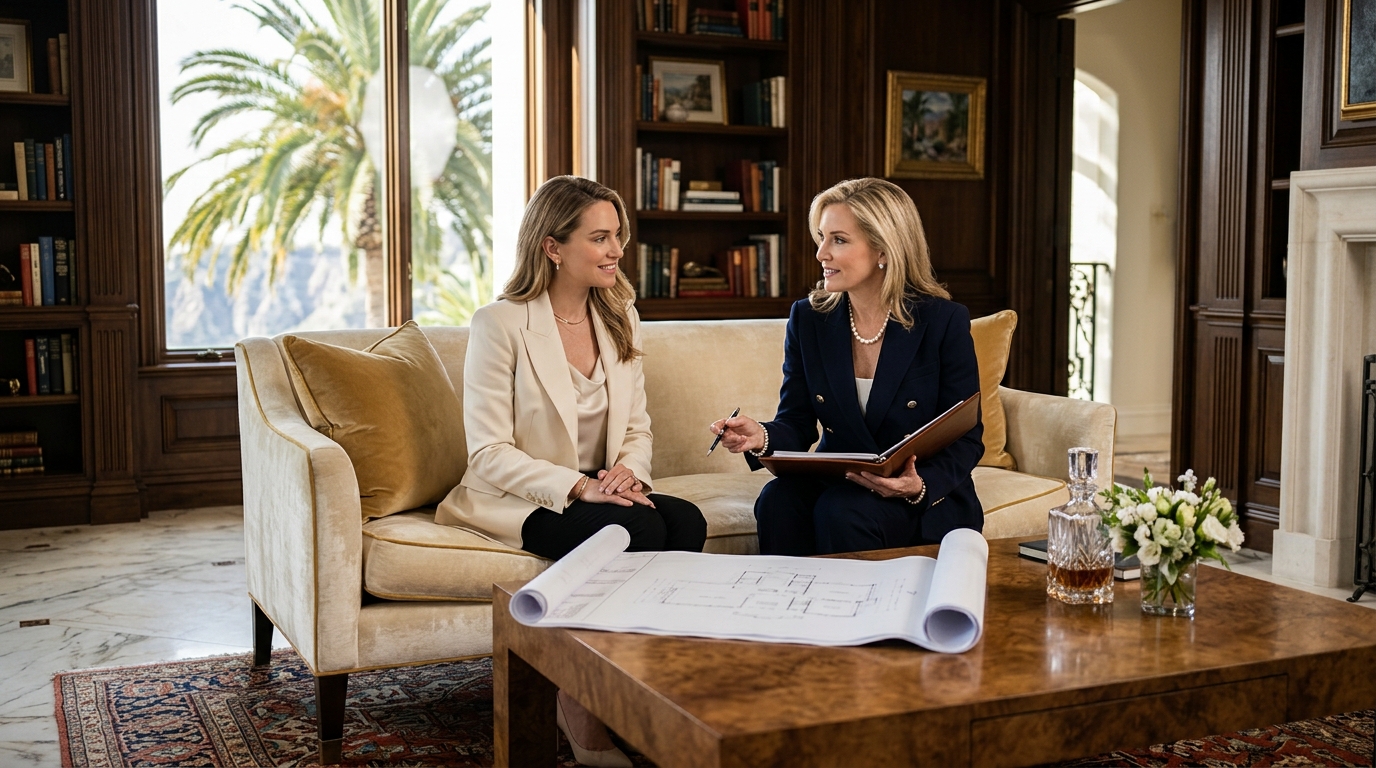
Hiring a luxury interior designer is not simply a matter of selecting the most attractive portfolio. For a high-end residence, the designer becomes the person responsible for translating your lifestyle, architecture, art collection, entertaining requirements, privacy expectations, and long-term vision into a fully coordinated environment.
The right firm should be able to do more than select furniture and finishes. It should manage spatial planning, lighting, custom millwork, art placement, technology coordination, procurement, installation, and communication among architects, engineers, contractors, artisans, and vendors. In an ultra-luxury project, design quality and operational discipline are inseparable.
This guide explains how to find and evaluate a luxury interior designer for a private residence, estate, historic property, international home, or highly customized new build. It also provides questions to ask, documents to request, warning signs to recognize, and a practical framework for comparing service levels.
1. Define the Residence Before Contacting Designers
A productive search begins with a clear project brief. You do not need to know the final style, but you should identify the parameters that will determine the firm’s suitability.
- Property type: new construction, historic home, penthouse, coastal estate, mountain retreat, ranch, or international residence.
- Project status: property acquisition, architectural planning, construction, renovation, or furnishing.
- Approximate scale: square footage, number of bedrooms, guest accommodations, staff areas, outdoor rooms, wellness spaces, and entertainment zones.
- Lifestyle requirements: formal entertaining, family living, collections, security, accessibility, pets, children, hospitality, or frequent international travel.
- Desired scope: interiors only, architecture and interiors, furniture and art, turnkey delivery, or complete project management.
- Geographic requirements: local service in Beverly Hills, national work across the United States, or international coordination.
- Timing: target occupancy date, construction milestones, seasonal use, or a planned event.
Also distinguish between preferences and non-negotiables. For example, you may prefer a classical interior with Hollywood glamour, while requiring discreet technology, museum-quality lighting, acoustic privacy, and a family-friendly level of durability. Sharing this distinction helps a principal designer determine whether the relationship is appropriate.
2. Build a Shortlist Based on Relevant Experience
Search for firms that have completed projects comparable to yours rather than relying only on general acclaim. A designer known for boutique hospitality interiors may not be the best fit for a 30,000-square-foot private estate, just as a residential stylist may not have the technical infrastructure to coordinate a complex renovation.
Look for evidence of experience with the following:
- Large-scale residences and multi-structure estates.
- Historic renovations requiring sensitivity to architectural character.
- New construction coordinated with architects and builders from the earliest planning stages.
- Custom libraries, cinemas, wine rooms, gyms, spas, screening rooms, and secure offices.
- High-value art, antiques, collectibles, and specialty furniture.
- Private aircraft, yachts, palaces, boutique hotels, or other environments requiring exceptional detailing.
- International procurement, customs, shipping, installation, and local consultant coordination.
Longevity can be a useful screening factor because a long-established studio may have deeper supplier relationships, experienced staff, and a proven record of managing complicated installations. However, years in business should never replace project-specific verification. Ask how long the current leadership team has worked together and who will actually lead your residence.
3. Verify Credentials, Team Structure, and Technical Capability
Luxury design is both creative and technical. Interior designers may coordinate life-safety requirements, accessibility, lighting, acoustics, building systems, construction documents, and code-related issues. The Council for Interior Design Qualification identifies space planning, material selection, lighting, acoustics, code compliance, project documentation, and collaboration with architects and engineers as important elements of professional interior design practice. NCIDQ Certification is a recognized credential for professional competency, although regulation varies by jurisdiction and requirements should be confirmed locally. ([cidq.org](https://www.cidq.org/about-cidq/what-is-interior-design/?utm_source=openai))
During due diligence, request:
- Names and roles of the principal designer, project director, senior designers, procurement team, and site representatives.
- Applicable licenses, registrations, certifications, and professional memberships.
- Evidence of professional liability insurance and general business insurance.
- Examples of construction drawings, finish schedules, specifications, and installation documentation.
- The firm’s process for coordinating with the architect, structural engineer, lighting designer, landscape architect, security consultant, and contractor.
- Information about who can approve substitutions, resolve site issues, and authorize procurement decisions.
Do not assume that a celebrated creative director personally manages every detail. A strong luxury studio should be able to explain how its creative vision is protected while day-to-day decisions are handled by qualified professionals.
4. Read the Portfolio as Evidence of Execution
A portfolio should reveal more than a consistent visual signature. Study whether the firm can adapt its design language to the architecture, setting, and client. Compare completed examples across traditional, transitional, contemporary, and highly individual interiors.
When reviewing a portfolio, look closely at:
- Proportion: whether rooms feel balanced at different scales and ceiling heights.
- Circulation: whether the layout supports privacy, service, entertaining, and everyday movement.
- Lighting: whether architectural, decorative, and natural light work together at different times of day.
- Millwork: whether cabinetry, doors, paneling, moldings, and hardware appear integrated rather than decorative afterthoughts.
- Material transitions: whether stone, wood, metal, plaster, textiles, and paint meet with precision.
- Comfort: whether seating, acoustics, temperature, window treatments, and technology support actual use.
- Individuality: whether the home appears tailored to its owners rather than copied from a showroom.
Ask to see a fuller project archive, not only a small selection of published photographs. Request before-and-after documentation, concept imagery, technical drawings, installation images, and photographs taken after the client occupied the home. A designer’s ability to solve an irregular floor plan, preserve historic details, conceal technology, or integrate an extensive collection may be more relevant than a single polished image.
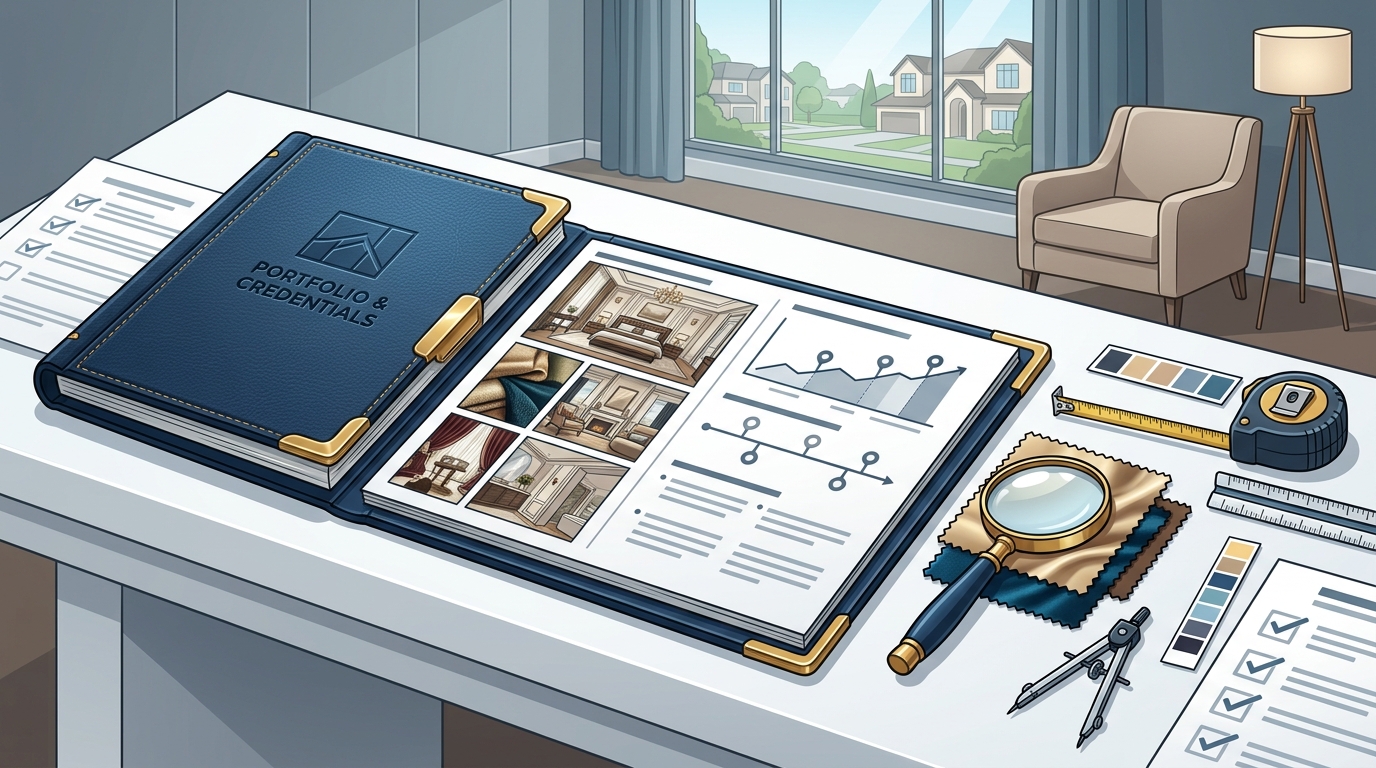
For an overview of Beverly Hills Luxury Interiors’ design work, review the firm’s Portfolio.
5. Investigate Materials, Artisans, and Global Sourcing
In a high-end residence, the distinction between good and exceptional design often appears in the details: the book-matching of stone, the hand of a textile, the proportion of a custom sofa, the patina of hardware, or the way a cabinet door aligns across an entire wall.
Ask each firm how it sources and verifies:
- Rare and highly figured marbles, onyx, limestone, and other natural stones.
- Hand-finished plaster, specialty paints, decorative metalwork, and artisan surfaces.
- Custom rugs, embroidery, wall coverings, drapery, and performance textiles.
- One-of-a-kind furniture, bespoke upholstery, and proprietary furnishings.
- Architectural hardware, decorative lighting, plumbing fixtures, and integrated technology.
- Antiques, contemporary art, accessories, and objects selected for the residence.
A professional procurement operation should address authenticity, samples, lead times, freight, insurance, customs, warehousing, inspection, damage claims, and installation. International projects may require coordination across time zones, currencies, local codes, tax rules, and regional trades. Ask who owns those responsibilities and how they are reported to you.
Material samples should be assessed in the actual property whenever possible. A stone that appears quiet in a showroom may become dramatic under evening lighting; a textile that feels luxurious may not withstand frequent use; and a finish that suits a formal salon may be inappropriate for a family room. Explore the studio’s Craftsmanship Partnerships to understand the importance of material relationships and bespoke sourcing.
6. Test the Firm’s Communication and Project Process
The early consultation is an audition for both sides. Pay attention not only to the presentation but also to how the firm listens, organizes information, identifies risks, and responds to uncertainty.
A mature process typically includes:
- Discovery meetings and a written project brief.
- Site review, architectural analysis, and documentation of existing conditions.
- Concept development, mood studies, preliminary space planning, and design direction.
- Design development with room-by-room selections and coordinated drawings.
- Budget alignment before major commitments are made.
- Construction documentation and coordination with the project team.
- Procurement tracking, vendor management, and inspection.
- Installation, styling, punch-list completion, and post-installation service.
Ask how often you will receive updates, where decisions are recorded, how approvals are obtained, and how urgent site matters are escalated. Weekly financial and schedule reporting is particularly valuable during construction and installation. The firm should also explain its approach to wellness, acoustics, indoor air quality, ergonomic comfort, and technology without allowing those systems to compromise the architectural character of the home.
7. Understand Fees, Procurement, and Budget Controls
Luxury interior design fees are not standardized. Depending on the firm and scope, compensation may involve a fixed design fee, hourly consulting, a percentage of project costs, procurement-related compensation, or a combination of structures. The important issue is not choosing the cheapest model; it is understanding the complete financial picture before work begins.
Request a written explanation of:
- Initial consultation and concept fees.
- Design development and documentation fees.
- Procurement, purchasing, receiving, warehousing, and installation charges.
- Trade discounts, purchasing fees, markups, and commissions, if applicable.
- Architect, engineering, contractor, consultant, and permit allowances.
- Travel, freight, storage, insurance, taxes, duties, and currency-related charges.
- Revision limits and fees for work outside the original scope.
- Contingency recommendations for renovation discoveries and price changes.
Before approving a major purchase, you should be able to see the item description, quantity, specification, price, lead time, shipping status, and approval record. A controlled change-order process is equally important. No material scope modification should proceed without an explanation of its effect on cost, schedule, quality, and design intent.
Professional contract structures commonly address design services, purchasing, compensation, termination, and dispute resolution. ASID’s residential contract resources, for example, identify these topics as important components of residential design agreements. ([asid.org](https://www.asid.org/design-business/contracts?utm_source=openai))
8. Ask Better Questions During the Consultation
Interview at least two or three qualified firms using the same core questions. This makes differences in approach easier to compare.
Questions about creative direction
- How do you translate a client’s lifestyle into a design concept?
- How do you balance timelessness with current technology and contemporary comfort?
- How do you protect the individuality of a residence when the client has an established personal collection?
Questions about execution
- Who will lead the project from concept through installation?
- How do you coordinate with the architect and general contractor?
- What drawings and specifications will be included?
- How do you inspect custom work before it reaches the property?
- What happens if an item arrives damaged or a fabrication does not meet the approved sample?
Questions about communication
- How often will we meet?
- How are approvals documented?
- Who is available for time-sensitive decisions?
- How do you handle disagreements about design, cost, or schedule?
Questions about references
- May I speak with clients whose projects were similar in scale and complexity?
- What challenges occurred on those projects, and how were they resolved?
- Did the final cost and schedule remain consistent with the approved plan?
References should be recent enough to reflect the current team and systems. A reference from a project completed many years ago may not describe the people who would serve your residence today.
9. Review the Agreement Before You Sign
A luxury design agreement should eliminate ambiguity. Have the document reviewed by your attorney and make sure the scope matches what was discussed during the presentation.
At minimum, confirm that the contract addresses:
- Services and deliverables by project phase.
- Responsibilities of the designer, client, architect, contractor, and consultants.
- Fee calculations, payment schedule, retainers, and reimbursable expenses.
- Procurement authority, ownership of goods, deposits, cancellations, and returns.
- Approval procedures and the treatment of substitutions.
- Expected schedule, critical milestones, and causes of delay.
- Insurance, confidentiality, privacy, photography, and publicity permissions.
- Warranty responsibilities for custom furniture, installations, and workmanship.
- Intellectual property, drawings, specifications, and permitted use of design documents.
- Termination, suspension, dispute resolution, and applicable law.
Do not rely on verbal assurances about deadlines, included services, or warranty coverage. If a promise matters to your decision, it should appear in the written agreement or an attached project schedule.
10. Compare Luxury Interior Design Service Levels
The following ranges are planning references rather than universal price quotes. Actual fees and project costs vary according to location, property condition, scope, materials, labor, procurement complexity, and the level of customization required.
| Service level | Illustrative design investment | Typical inclusions | Appropriate for |
|---|---|---|---|
| Focused residential design | $50,000–$150,000 | Space planning, finish direction, furniture selection, and limited procurement | Condos, smaller residences, and targeted renovations |
| Premium custom residence | $150,000–$500,000 | Architectural coordination, custom millwork, lighting coordination, detailed selections, and expanded procurement | Large homes, estates, and historic renovations |
| Ultra-luxury bespoke program | $500,000–$2,000,000 or more | Global sourcing, proprietary furnishings, extensive custom fabrication, wellness planning, art coordination, installation, and full project administration | International estates, palaces, landmark residences, and high-profile private homes |
When comparing proposals, compare scope rather than headline price. One firm’s fee may include procurement administration, installation supervision, and extensive documentation while another firm may charge those services separately.
Warning Signs to Take Seriously
A designer may not be the right partner if the firm:
- Cannot identify the team members who will actually work on your project.
- Shows only styled photography and refuses to discuss technical documentation.
- Provides an unusually vague fee proposal.
- Cannot explain procurement markups, purchasing responsibilities, or damaged-goods procedures.
- Promises an aggressive completion date without asking about permits, fabrication, or construction conditions.
- Pressures you to approve expensive purchases before the scope and budget are documented.
- Dismisses the need for insurance, licensing verification, or a detailed contract.
- Has no clear process for confidential client information, photography, or property access.
Luxury should feel considered from the first conversation. Disorganization during the proposal stage often becomes more expensive once construction and procurement are underway.
Key Takeaways
- Start with a detailed project brief covering the property, scope, lifestyle, location, budget, and timeline.
- Shortlist designers based on completed work comparable to your residence in scale and complexity.
- Verify credentials, insurance, technical capability, team structure, and applicable local requirements.
- Review full project examples for planning, lighting, millwork, material transitions, comfort, and individuality.
- Investigate artisan relationships, sourcing procedures, quality control, freight, customs, and installation.
- Demand clear reporting for budget, schedule, approvals, change orders, and procurement status.
- Interview the principal designer and the operational team that will manage the project.
- Use a detailed written agreement covering fees, deliverables, purchasing, warranties, confidentiality, and termination.
- Choose the firm offering the strongest combination of creative alignment, technical competence, transparency, and personal trust.
Frequently Asked Questions
What should I look for in a luxury interior designer?
Look for relevant experience, a documented portfolio, strong technical coordination, qualified project leadership, sophisticated procurement capabilities, reliable artisan relationships, transparent fees, appropriate insurance, and references from clients with comparable projects. The designer’s process should also align with your expectations for communication, privacy, and decision-making.
Does a luxury interior designer need to be licensed?
Requirements differ by jurisdiction and by the type of work being performed. Some locations regulate the title or practice of interior design, while others do not. NCIDQ Certification is a recognized professional competency credential and is required for licensure in many U.S. states and Canadian provinces, but clients should confirm requirements with the relevant local authority. ([cidq.org](https://www.cidq.org/for-certificate-holders/jurisdictions-and-requirements/?utm_source=openai))
How long does a high-end residential interior design project take?
A complex luxury renovation commonly requires approximately eighteen to thirty-six months from initial concept through final installation. The actual schedule depends on the property’s size and condition, architectural and permit requirements, custom fabrication, procurement lead times, shipping, and installation complexity. A credible firm should provide milestone planning rather than an unsupported single completion date.
How are luxury interior design fees usually calculated?
Fees may combine fixed design fees, hourly consulting, percentage-based compensation, procurement charges, installation administration, and reimbursable expenses. Ask for a complete fee schedule that explains what is included, how purchases are billed, whether markups apply, and how out-of-scope revisions are handled.
Can one firm manage an international residence?
Yes, provided the firm has demonstrated experience with international procurement, shipping, customs, local contractors, time-zone coordination, and regional regulations. The best arrangement usually combines a central design vision with qualified local professionals who understand permitting, construction practices, and site conditions.
What should a luxury design contract say about custom furniture?
The agreement should address specifications, approvals, deposits, ownership, lead times, inspection, delivery, installation, warranty coverage, defects, repair timelines, replacement procedures, and responsibility for damage. These terms are particularly important when pieces are one of a kind or fabricated overseas.
How can I protect the approved budget?
Require a detailed baseline budget, regular financial reporting, written approvals, documented allowances, a contingency reserve, and a formal change-order process. Every proposed change should identify its cost and schedule effect before it is authorized. Avoid approving major purchases based only on verbal estimates.
Begin Your Residence Design Consultation
The ideal luxury interior designer is a creative interpreter, technical coordinator, procurement expert, and trusted steward of your home. Selecting that partner requires more than comparing images online; it requires a disciplined review of experience, process, communication, craftsmanship, financial transparency, and personal compatibility.
Beverly Hills Luxury Interiors creates bespoke residential interiors for private clients in Beverly Hills, across the United States, and internationally. The studio’s approach brings together classical proportion, refined materials, Hollywood elegance, architectural precision, and highly customized craftsmanship for residences and other exceptional environments, including hotels, palaces, yachts, and private jets.
To discuss your property, requirements, and desired level of service, request a confidential project assessment through the Contact Page. You can review completed work in the Portfolio, explore the studio’s Craftsmanship Partnerships, learn about the firm’s philosophy on the About Page, or connect with the studio through beverlyhillsluxuryinteriors.com.
Related resources
- Evaluate Designer Credentials and Track Record
- Review Portfolio Depth and Project Complexity
- Assess Materials Sourcing and Craftsmanship Partnerships
- Verify Project Management and Budget Transparency
- Conduct a Structured Interview Process
- Finalize Contract Terms and Scope of Work
- Comparative Service Tier Analysis
- Frequently Asked Questions
- Begin Your Design Legacy