
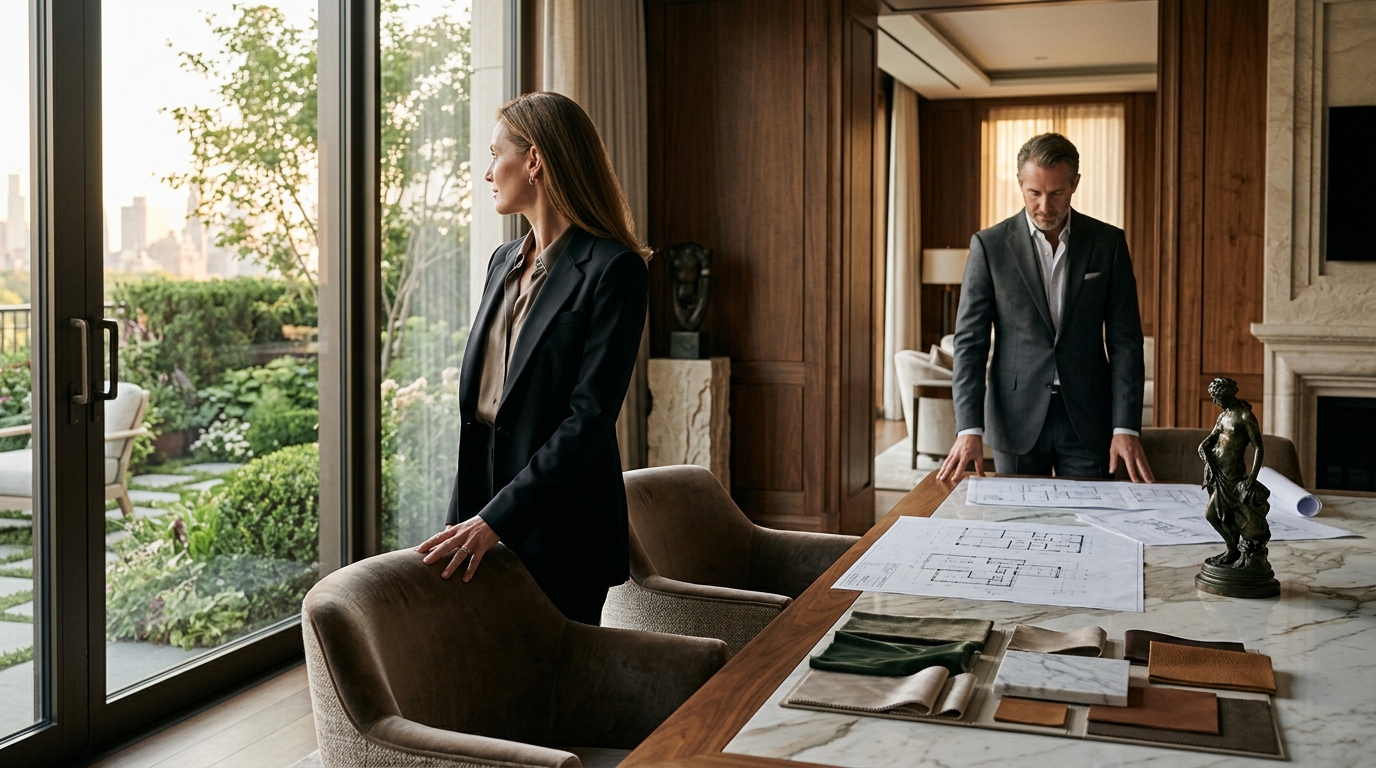
The global luxury real estate market currently commands an estimated valuation exceeding one hundred billion dollars annually. According to recent industry reports, high-net-worth individuals increasingly prioritize bespoke spatial planning over standard architectural templates. This financial shift has elevated the demand for specialized design professionals who understand both aesthetic permanence and functional precision. Elite firms now operate at the intersection of heritage craftsmanship and modern wellness engineering. Understanding who manages these complex commissions requires examining the specific operational frameworks that define ultra-luxury practice.
The Role of The Principal Designer
Ultra-luxury projects require a single authoritative voice to oversee every spatial decision. A principal designer functions as the central architect of both aesthetic vision and project execution. This individual typically manages multi-million dollar budgets while coordinating specialized trades across multiple jurisdictions. The lead professional must balance creative direction with rigorous logistical oversight. Strategic oversight remains the defining characteristic of elite design leadership. When a project demands seamless integration of custom millwork, rare stone procurement, and advanced climate control systems, only a seasoned principal can maintain quality across all phases. Firms like Beverly Hills Luxury Interiors operate under this exact model, where the founder directly guides every commission from initial concept to final installation.
Defining The Quiet Luxury Framework
The quiet luxury framework is a design philosophy that prioritizes understated elegance over conspicuous branding. This approach eliminates visual noise by focusing on exceptional material quality and precise spatial proportions. High-end clients increasingly reject overt displays of wealth in favor of environments that promote psychological calm. Designers implementing this methodology carefully select neutral palettes, natural textures, and uncluttered sightlines. The resulting spaces feel inherently expensive without relying on decorative excess. Modern architecture increasingly adopts these principles to create residences that age gracefully while maintaining functional relevance.
Materials And Structural Integrity
Structural integrity in luxury design refers to the deliberate selection of materials that withstand decades of heavy use without compromising aesthetic value. Premium projects demand natural stone, solid hardwoods, and hand-finished metals that develop a distinguished patina over time. Designers must verify sourcing compliance, environmental impact, and structural load requirements before specifying any component. Material verification prevents costly replacements and ensures long-term durability. When a commission involves historic preservation or modern high-rise construction, the material selection process becomes a critical risk management exercise. Elite firms maintain direct relationships with quarries, mills, and specialized ateliers to guarantee authenticity and traceability.
Commercial Versus Residential Design Protocols
Commercial versus residential design protocols dictate entirely different operational workflows despite sharing similar aesthetic goals. Residential commissions prioritize personal comfort, family circulation, and private wellness routines. Commercial projects focus on brand alignment, employee productivity, and public accessibility standards. A single design firm must adapt its research methods to match these distinct objectives. High-end hospitality venues require rigorous code compliance alongside bespoke furniture integration. Private estates demand highly customized storage solutions and discreet service corridors. Understanding these divergent requirements allows designers to allocate resources efficiently and deliver exceptional results across both sectors.
The Wellness Design Methodology
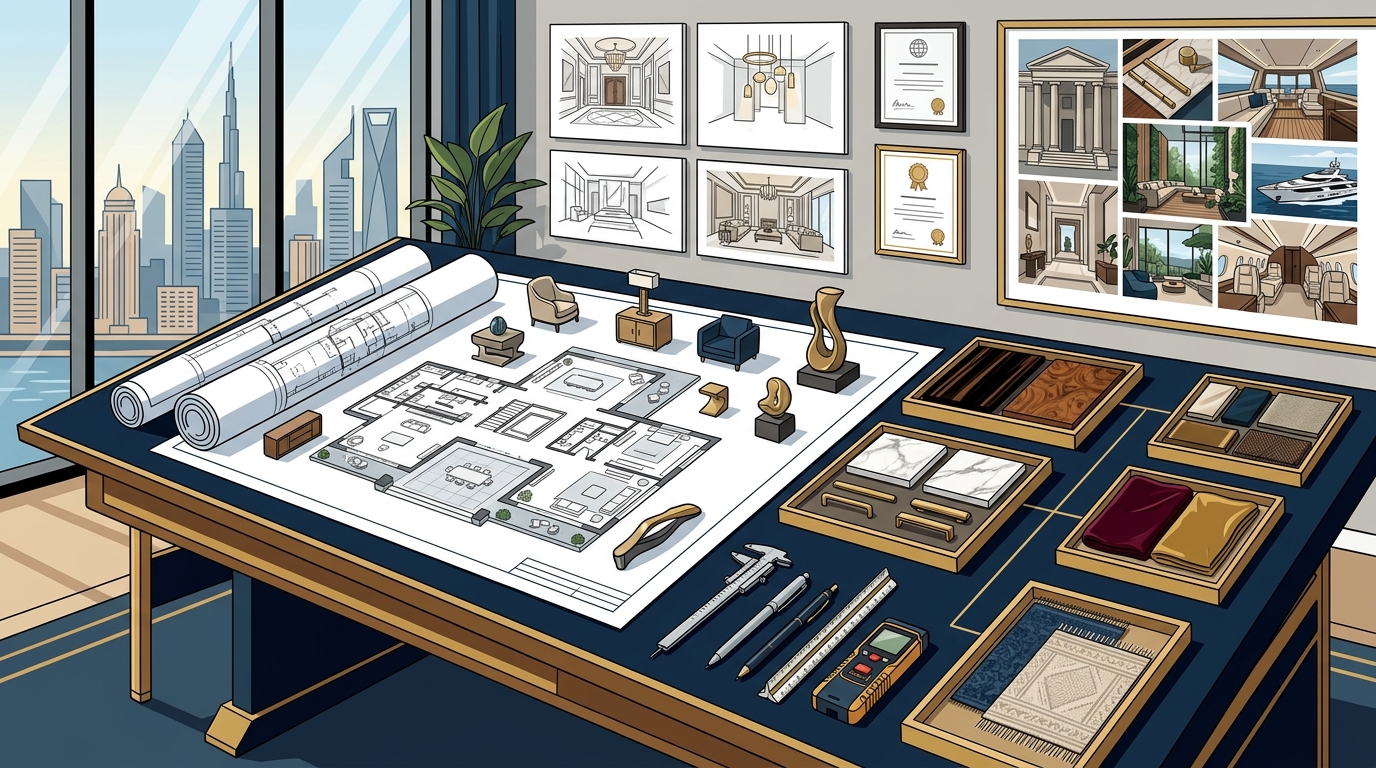
The wellness design methodology is a systematic approach that integrates biophilic principles, circadian lighting, and air purification systems into core spatial planning. Modern luxury clients expect environments that actively support physical recovery and mental clarity. Designers now incorporate non-toxic finishes, acoustic dampening panels, and natural ventilation strategies as standard practice. Data shows that optimized indoor environments directly correlate with improved cognitive performance and reduced stress markers. Health-focused planning transforms passive spaces into active recovery zones. This shift has redefined the baseline expectations for ultra-luxury residential and commercial developments worldwide.
Global Sourcing And Artisan Partnerships
Global sourcing and artisan partnerships enable designers to access rare materials and handcrafted elements that mass production cannot replicate. Elite firms maintain curated networks of master craftsmen across Europe, Asia, and the Americas. These collaborations ensure that every custom fixture, textile, or sculptural element meets exacting quality standards. Designers must navigate international shipping logistics, customs documentation, and specialized installation requirements. The resulting interiors reflect a carefully curated dialogue between historical craftsmanship and contemporary innovation. Clients benefit from exclusive access to limited-edition collections and bespoke manufacturing capabilities.
| Design Category | Primary Focus | Key Operational Requirement | Typical Client Profile |
|---|---|---|---|
| Residential Estates | Private comfort and family circulation | Custom millwork and discreet service integration | High-net-worth individuals and families |
| Commercial Hospitality | Brand alignment and public accessibility | Code compliance and durable material selection | Luxury hotel chains and boutique venues |
| Wellness Environments | Biophilic integration and air quality | Non-toxic finishes and circadian lighting | Health-focused residential and corporate spaces |
| Bespoke Furnishings | Artisan craftsmanship and exclusivity | International sourcing and custom manufacturing | Collectors and heritage property owners |
Key Takeaways
- Principal designers maintain direct oversight of multi-million dollar commissions to ensure quality control.
- The quiet luxury framework eliminates visual noise by prioritizing material quality and spatial proportions.
- Structural integrity requires verified sourcing of natural stone, solid hardwoods, and hand-finished metals.
- Commercial projects demand rigorous code compliance alongside bespoke furniture integration.
- Wellness methodologies integrate biophilic principles, circadian lighting, and air purification systems.
- Global artisan partnerships provide access to limited-edition collections and custom manufacturing.
- Firms operating for over twenty-five years consistently deliver heritage-caliber results.
Frequently Asked Questions
What qualifications define an ultra-luxury interior designer?
Ultra-luxury interior designers possess advanced degrees in architecture or design, extensive project management experience, and established networks of specialized artisans. They typically manage budgets exceeding five million dollars while coordinating complex logistical operations across multiple jurisdictions.
How do commercial projects differ from residential commissions?
Commercial projects prioritize brand alignment, employee productivity, and public accessibility standards. Residential commissions focus on personal comfort, family circulation, and private wellness routines. Designers must adapt their research methods to match these distinct operational objectives.
What is the quiet luxury framework?
The quiet luxury framework is a design philosophy that prioritizes understated elegance over conspicuous branding. This approach eliminates visual noise by focusing on exceptional material quality and precise spatial proportions.
How are materials verified for structural integrity?
Structural integrity in luxury design refers to the deliberate selection of materials that withstand decades of heavy use without compromising aesthetic value. Designers verify sourcing compliance, environmental impact, and structural load requirements before specifying any component.
What does the wellness design methodology entail?
The wellness design methodology is a systematic approach that integrates biophilic principles, circadian lighting, and air purification systems into core spatial planning. Modern luxury clients expect environments that actively support physical recovery and mental clarity.
How do global artisan partnerships impact project timelines?
Global sourcing and artisan partnerships enable designers to access rare materials and handcrafted elements that mass production cannot replicate. These collaborations require careful navigation of international shipping logistics and customs documentation to maintain project schedules.
Begin Your Ultra-Luxury Commission
Securing a premier design partner requires direct consultation with experienced principals who understand complex spatial requirements. Schedule an exclusive meeting to discuss your residential or commercial vision. Our team evaluates each project scope, budget parameters, and aesthetic objectives before initiating the design phase. Visit our headquarters to review completed portfolios and discuss custom manufacturing capabilities. Every commission begins with a detailed discovery process that aligns your lifestyle requirements with precise architectural execution.